 GBP
GBP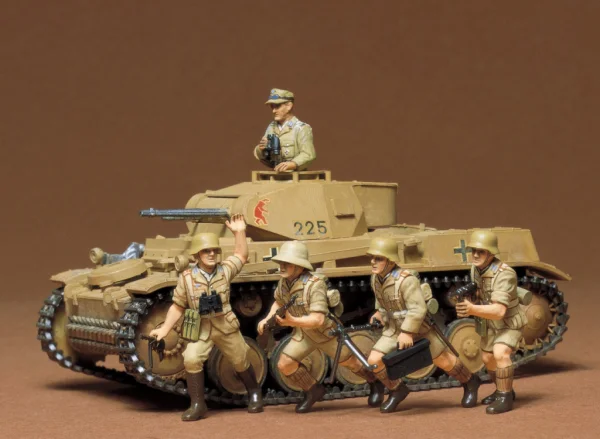
Customers Also Buy
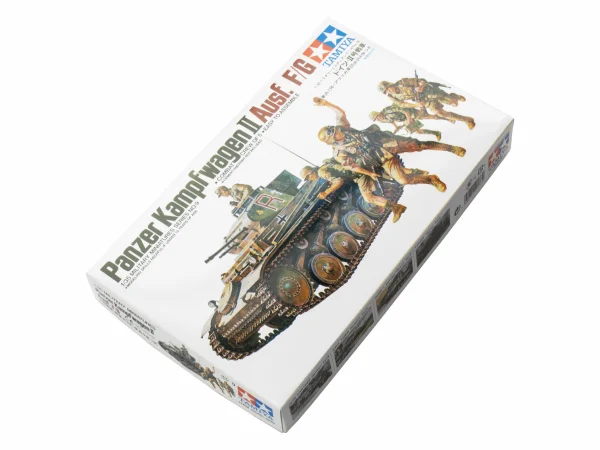
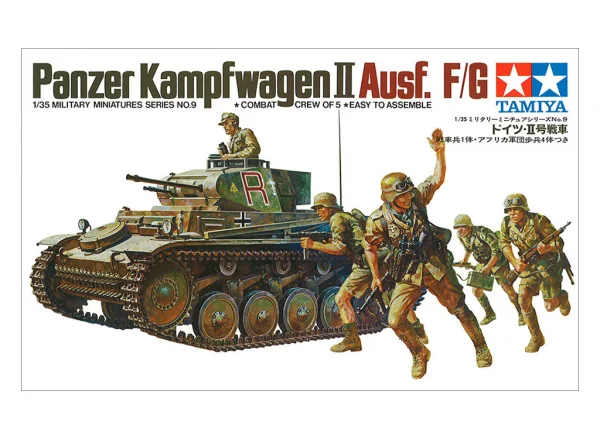
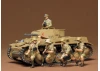
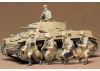
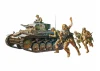
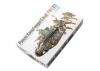
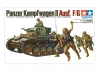
Popular with customers who buy products like the Tamiya Ger.Panzerkampfwagen II

Description
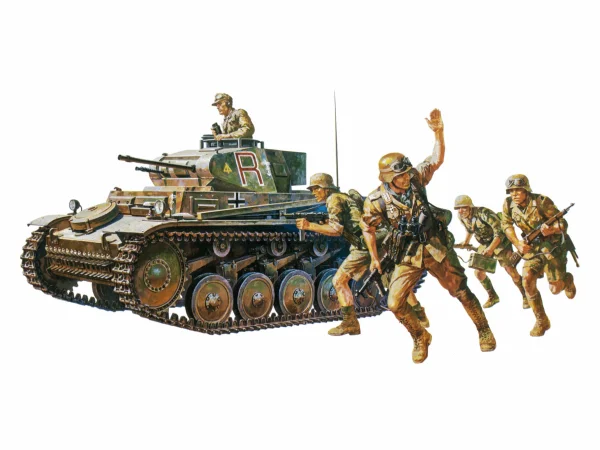
The Tamiya Ger. Panzerkampfwagen II (HC-35009) focuses on the German PzKpfw II and its pivotal role in the early stages of the Second World War. It traces the tank’s evolution and the context in which it spearheaded fast, coordinated operations often described as Blitzkrieg.
Historical Overview
Beginning with the invasion of Poland on 1 September 1939 and continuing through the breakthrough of the Maginot Line and the fall of France, the Panzerkampfwagen II featured prominently in German armoured forces. Developed as an interim solution while larger designs were in progress, it became a mainstay in early campaigns due to its mobility and widespread availability.
Panzer II Development Highlights
- Conceived in 1934 to bridge delays in PzKpfw III and IV production; the selected design was developed in cooperation with Daimler-Benz and officially named Panzerkampfwagen II.
- Early a1, a2 and a3 types used a 6-cylinder, 130 HP Maybach HL37 engine with speeds up to 40 km/h; subsequent versions adopted the 140 HP Maybach HL62 and reinforced frontal armour.
- The c-type introduced five large road wheels with leaf-spring suspension and a reshaped, more rounded hull front, establishing a template for later production.
- Mass production A, B and C types followed up to early 1940; at the start of the Blitzkrieg, of 2,580 German tanks, nearly 955 were Panzer II.
- The F type strengthened armour to approximately 35 mm front and 20 mm sides, adopted a 20 mm KwK 30 main gun, and revised the upper frontal plate and driver’s vision layout.
- The G type upgraded to the 20 mm KwK 38 and added a stowage box at the rear of the turret.
While later judged modest in firepower and protection, the Panzerkampfwagen II’s agility and numbers made it highly effective in its era, underpinning early-war German success.
Secured by Stripe
Specifications
About the German Panzerkampfwagen II
In the morning of September 1, 1939, the German forces consisting of the 3rd, 4th, 8th, 10th and the 14th Armies invaded Poland all heading for Warsaw, its capital. This was the beginning of the 2nd World War that had shaken the whole world for six years and the Germans made a good show of their war efforts at the start with this violent surprise offensive by massed air forces and mechanized ground forces in close co-ordination, the so-called "Blitzkrieg". It was none other than the Pzkpfw 11 that had played the key role in this Blitzkrieg which started with the invasion of Poland to be followed by break-through of the Maginot-line 7 months later and ended with the surrender of France.
In anticipation of the delay in production of the two main strength tanks of the Pzkpfw III and the Pzkpfw IV then under development, the Ordnance Department decided in 1934 to develop a new tank instead to fill the gap. It gave specifications of the proposed new tank to the following three companies - the Mann, the Krupp and the Henschel. The specifications envisioned a tank weighing less than 10 tons and armed with 2 cm and 7.92 mm machine guns, one each. Among the designs of the rivaling three companies presented, the one by the Mann was selected and the Mann in cooperation with the Daimler-Benz developed a first tank of the a1 type in 1935. When 25 tanks of the same type were produced, the tank was officially named, "Panzer Kampfwagen II".
After the first 25, another 25 tanks of the a2 type and 50 of the a3 type were produced in succession by 1936. Tanks of these 3 types thus produced were equipped each with a 6-cylinder, 130HP, May-Bach HL37 engine and credited with a maximum speed of 40km/h. However, it was decried that the horse-power was not enough and the engine was replaced with a May-Bach HL-62 one of 140 HP. The frontal armour, too, was reinforced and a new tank of the b type was produced. In 1937, the Pzkpfw II was further improved and a series of new ones of the c type were produced. The c-type tanks used 5 large sized road wheels suspended only at one end by leaf spring. This suspension system newly introduced became a common feature to all the pzkpfw II produced ever since. Also, the front portion of hull was reshaped into a more roundish form. From 1937 to the beginning of 1940, Pzkpfw II of mass production types, A, B, and C, were manufactured in great numbers. To increase their productivity's, the frontal armour plate was replaced with an angular single-piece one. Pzkpfw II with specifications described above played the key role in the Blitzkrieg. At the start of this Blitzkrieg, the German tanks numbered 2580 in all, of which nearly half amounting to 955 in number were the Pzkpfw II. In 1940, mass production of the F type was started. The new Pzkpfw II was reinforced in its frontal armour (thickened to 35mm) and side (to 20mm). However, the improvement added its weight and its overall weight reached up to 9.5 tons. The main gun was replaced with a 20mm KwK 30 machine gun. The gun used to be an anti-air MG but remodeled into a main gun for a tank. Frontal armour to cover upper hull, also, was changed into a plain single-piece plate. Further, a false look-out window beside the genuine one for the driver and another for the same were newly added. These were the distinct features of the F-type tanks. After the F-type ones, those of the final mass-production type G were produced. Their main guns were much more powerful KWK 38 MGs, and each tank of this type was fixed a sundries-box at the rear of gun turret. These two were main features that clearly distinguished the G type from the preceding ones.
A series of the Pzkpfw II succeeding those of the g type were produced until those of the L type appeared. However, respective numbers of the Pzkpfw II of types produced were all small. It is true that judged by the current standard, these Pzkpfw II look quite inferior both in fire and defensive powers. But when compared with those of other countries active at the time, the Pzkpfw II should be ranked as by far the most superior one. Indeed, its nimble mobility matching well with the German application was the driving force of the spectacular victory won by the Germans at the initial period of the World War II.
Key Info:
- Brand: Tamiya
- Part No: HC-35009
- Barcode: 4950344088515
- Scale: 1:35
Delivery & Returns
Standard Shipping
£3.95 to most of the UK
Express Shipping
£6.95 to most of the UK
Worldwide Shipping
Available at checkout
Customer Reviews
No specific product reviews yet, why not write one?Questions & Answers
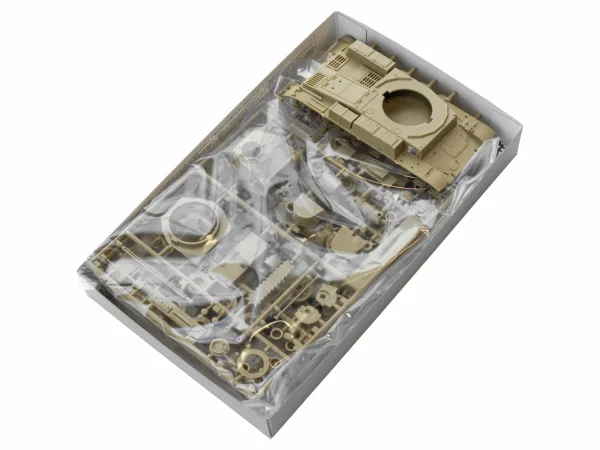
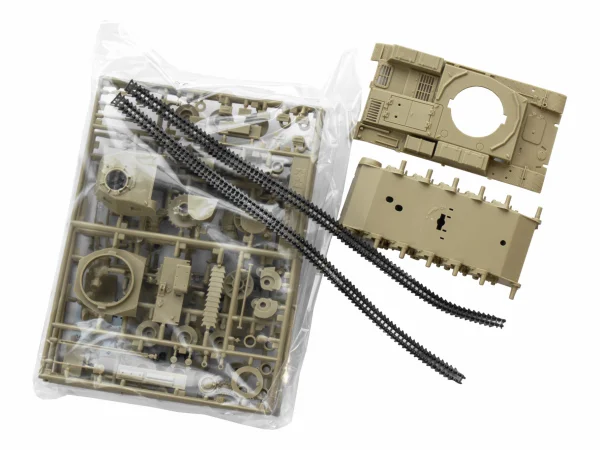
No, Tamiya sell these as unassembled and unpainted kits.
For more in depth queries, please contact us.