 GBP
GBPRadio sets - Old VS New
Updated by Rich
The most important component in any remote controlled vehicle whether it be a car or a plane, is the radio gear.
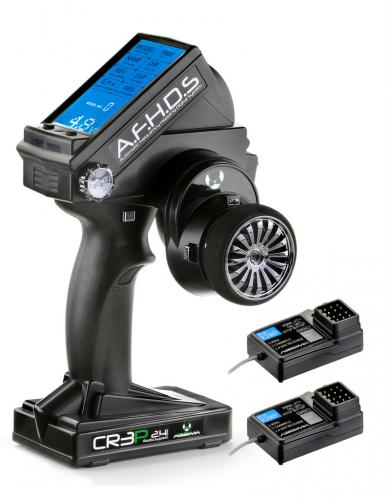
It consists of the transmitter and the receiver. Put simply, the hand held transmitter transmits input signals from the user to the receiver inside the boat/plane/car via radio waves. The receiver then uses the battery power to operate the model. Even if a model is internal combustion powered it is still ultimately operated by the onboard battery via the receiver and the servos.
For a very long time in the RC world, transmitters added more channels, more battery life time, and more reliability - but they all had a common feature. They all operated on a wavelength of either 36, 40, or 27mhz (mainly 27).
What is Wavelength?
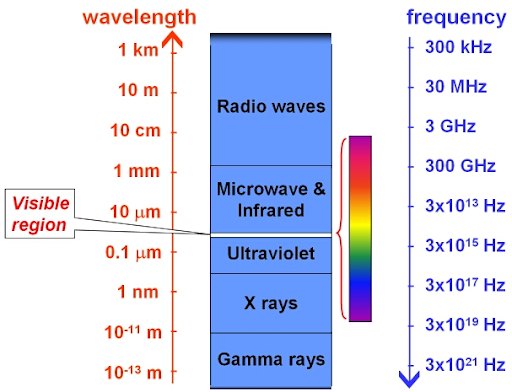
The wavelength that a transmitter operates on refers to the physical length of the radio waves as they travel from the transmitter to the receiver. They are of course invisible to the human eye but they can be measured. As you can see on the chart below, wavelengths used by old school transmitters are quite large in size.
Old 27mhz radio gear works in much the same way as a standard AM/FM radio does. This means they are prone to interference from other radio signals nearby. Think about when you have to tune your radio to a certain frequency to listen to your favourite station.
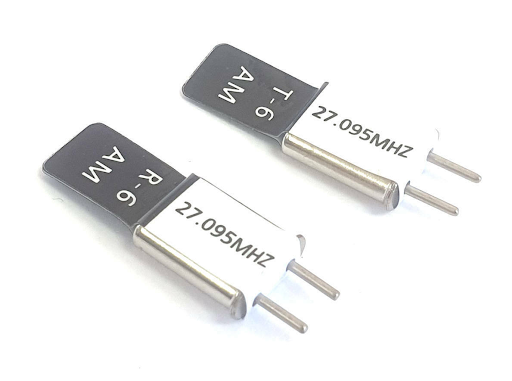
The way the technology got around this is by using a small device to regulate the exact frequency. They are called crystals. Every old 27mhz transmitter uses a crystal pair - one in the transmitter and one in the receiver. These would regulate the frequency that an RC model operated at, therefore making the transmitter and receiver ‘talk’ to each other. Also stopping other models from interfering as they would hopefully be operating on a different frequency. If someone was using the same frequency as you, then it would mean your models would be receiving mixed and matched signals and would take off with a mind of their own.
When Did It Change?
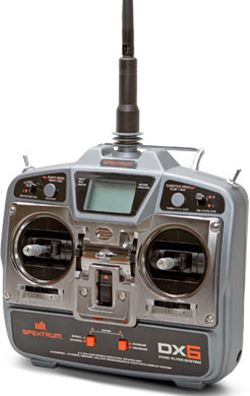
The first RC handset to use 2.4ghz technology was the Spektrum DX6 which was introduced to the RC world in 2005/6. It was simpler, didn’t require a crystal, and never ever suffered from interference. It pretty much changed the RC world for good, as all manufacturers followed suit and 2.4ghz technology is now a must have in any R/C model.
What makes it so much better?
Rather than operate on a single channel (set by a crystal), a 2.4ghz set transmission will zip through different frequencies and also from channel to channel many times per second. By using a wide spread of frequencies and different channels, the signal is completely free from interference. This is because other signals can easily ‘get around’ it due to its hopping or moving around. The old school 27mhz signals would be prone to simply hit head on and interfere with each other.
 Hobao Ho Bao Silicone Manifold Seals New Type
 Hyper ST Radio Plate/ Trabsponder Holder
 Hobao Hyper VS2 Rear Lower Arm Holder (RF) New With POM Pills
 XRay X8 Graphite Battery Holder - With Radio Plate Mounts
 RadioLink SE100 GPS with GPX Holder
 Battery and Radio Tray w/Holder (Scout RC)
 Radio Switch & Battery Holder - Manic
 Traxxas New style plastic propeller for Villain EX. Requires change to smaller pinion gears when used on older Villains equipped with part 1534 and 1533 propellers.
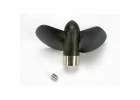 Traxxas New style plastic propeller for Villain EX. Requires change to smaller pinion gears when used on older Villains equipped with part 1534 and 1533 propellers.
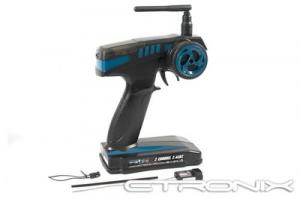 E-Tronix Pulse EX2 Sport Radio
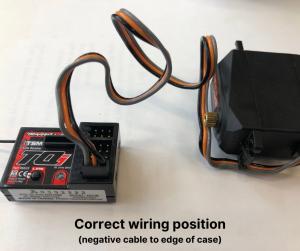 Where do my receiver cables go?
 Traxxas Skill Levels Explained
 Setting up LED Lights on Etronix ET1060 receiver
 Wheelspin models top picks for Christmas 2022
 Futaba compatibility chart
 New to the RC Hobby?
 Losi mini JRX2 brushless conversion
 Electric VS Nitro
 TTRC PUBG 4x4 RC